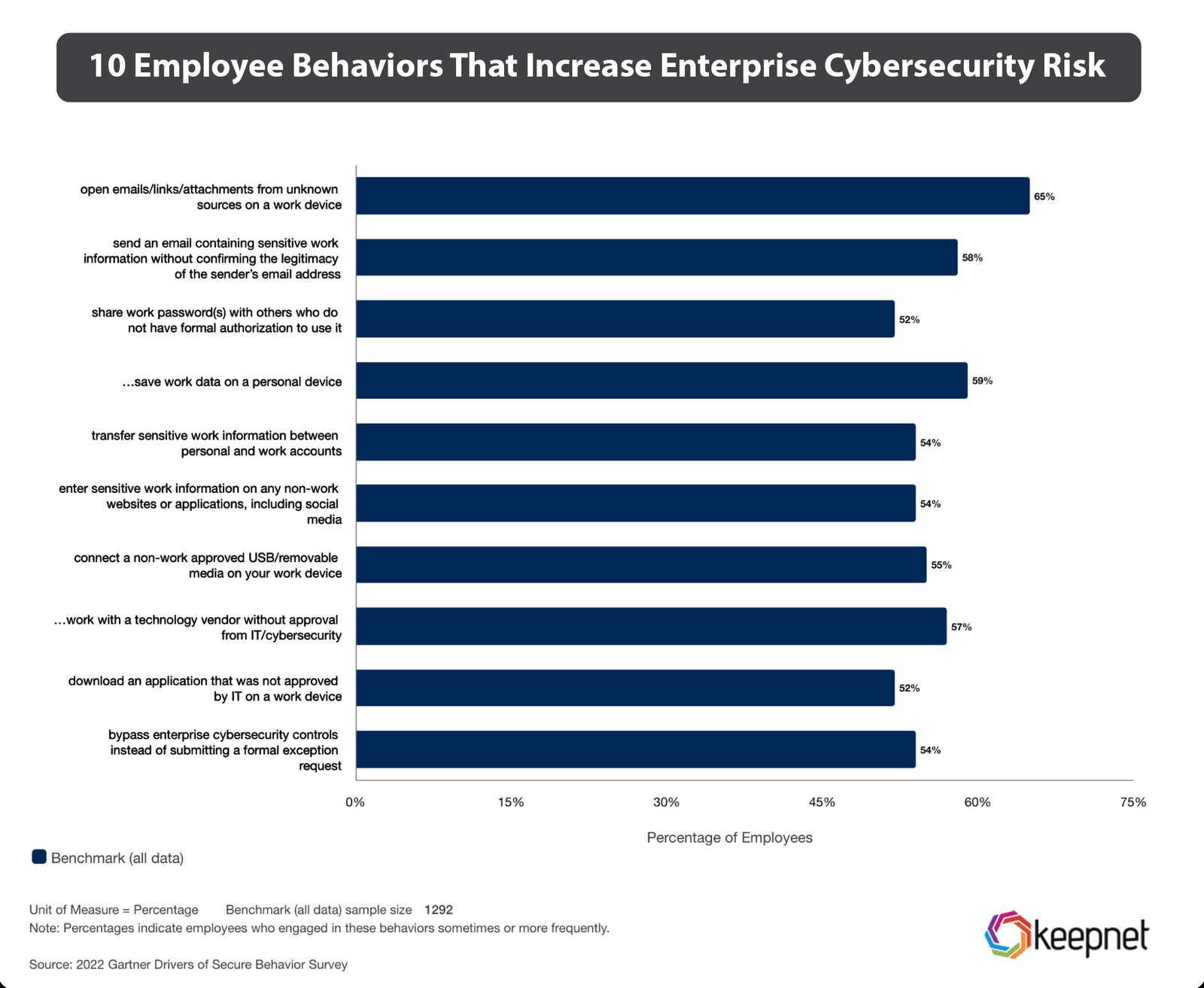
The “human factor” refers to how employees, contractors, and users interact with systems, data, and security controls. This includes:
How people respond to phishing and social engineering
How access privileges are requested, shared, or misused
How security policies are understood—or misunderstood
How fatigue, pressure, and complexity lead to mistakes
The 2023 findings show that attackers increasingly exploit human trust, habits, and gaps in awareness, rather than technical vulnerabilities alone.
Key Insights from The Human Factor 2023 Report
1. Social Engineering Continues to Rise
Phishing, pretexting, and impersonation attacks remain among the most successful tactics. Even security-aware users can be caught off guard by well-crafted, context-aware attacks.
2. Credential Misuse Is a Major Risk Driver
Compromised credentials—often obtained through human error—continue to be a primary entry point for breaches, enabling attackers to move laterally without detection.
3. Security Fatigue Is Real
Employees overwhelmed by alerts, policies, and complex workflows are more likely to bypass controls or make risky decisions, unintentionally increasing exposure.
4. Insider Risk Is Not Always Malicious
Most insider-related incidents stem from negligence, misjudgment, or lack of clarity—not intent. This makes education and governance as important as enforcement.
Why Technology Alone Is Not Enough
Organizations have invested heavily in tools, but the report emphasizes that tools must align with human behavior. When security controls are too complex or disruptive, users find workarounds—creating new vulnerabilities.
Effective security programs balance:
Strong technical controls
Clear, simple user experiences
Continuous education and reinforcement
Building a Human-Centric Security Strategy
The Human Factor 2023 Report points to several best practices:
Security Awareness as an Ongoing Process
One-time training is ineffective. Continuous, contextual learning helps reinforce secure behavior over time.
Least-Privilege and Identity Governance
Limiting access reduces the blast radius of human error and credential compromise.
Behavior-Based Risk Monitoring
Understanding normal user behavior enables faster detection of anomalies and potential threats.
Culture of Shared Responsibility
Security works best when employees see themselves as part of the defense—not the problem.
Implications for the Future of Work
With hybrid work, cloud adoption, and digital collaboration becoming the norm, human-centric risks are expanding. The report makes it clear: the future of security depends on aligning people, processes, and technology.
Organizations that invest equally in user experience, education, and governance will be better positioned to reduce risk and respond effectively to evolving threats.